

Breaking News

A scene no longer monochrome

“Blue autumn, there’s a rainbow in the sky, but no matter how hard I try, I still see only shades of blue,” – Bobby Goldsboro Not long after the sound of my car door shutting stopped reverberating through the quiet woods, I heard a light tapping sound off to my left as I began ...

A Smoldering History

The deadliest wildfire in the U.S. was the 1871 Peshtigo Fire. It scorched well over a million acres, torched 17 villages, and killed more than 1200 people. The personal accounts are horrific. And, this was a time when relatively few people lived in the northern hinterlands. Most the fire was in Wisconsin, with roughly 150,000 acres creeping into the southern Upper Peninsula along Green Bay. In the same year, well beyond 2.5 million acres burned across the Lower Peninsula in the Great Michigan and Thumb complexes. In 1881, another million acres burned through the Thumb. These ...

Strong like a moose

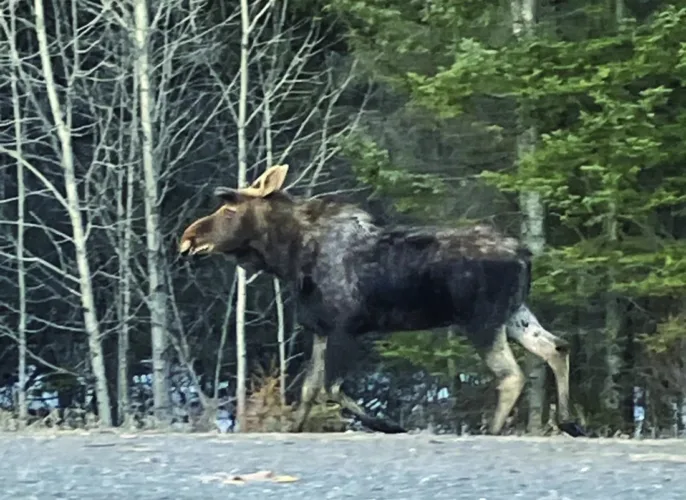
MARQUETTE — A collaborative wildlife research project in the Upper Peninsula has documented an exceptionally strong first-year survival rate among regional moose calves, significantly outpacing studied populations in neighboring states and Canadian provinces. Recent reports from the ongoing ...

Unpredictable nature of U.P. fall salmon fishing

When I turned into the parking lot, it was a couple of hours before sunset, which meant it would be great timing for hitting the water for some salmon or brown trout fishing before darkness would be dropping fast. Over the past three evenings, I have been down here to this big lake tributary ...

War against invasive

SKANDIA -- The U.S. Fish and Wildlife Service applied lampricide to the Chocolay River this week, as part of a larger, decades-long effort to control the population of invasive sea lamprey in the Great Lakes. Sea lamprey are native to the Atlantic Ocean, but spread to the Great Lakes in the late 19th and early 20th century thanks to the development of the Great Lakes shipping industry and the bypassing of Niagara Falls. According to the Great Lakes Fishery Commission, sea lampreys were first spotted in Lake Erie in 1921 and had arrived in Lake Superior by 1938. Sea lamprey have a ...